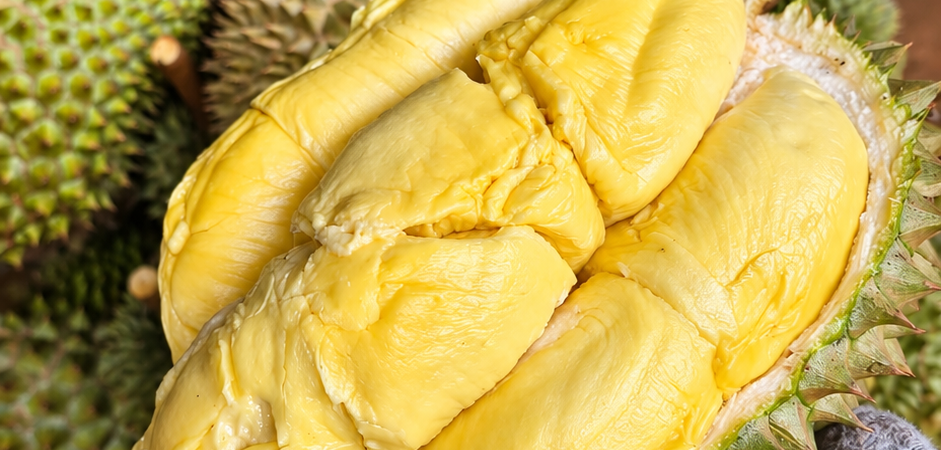
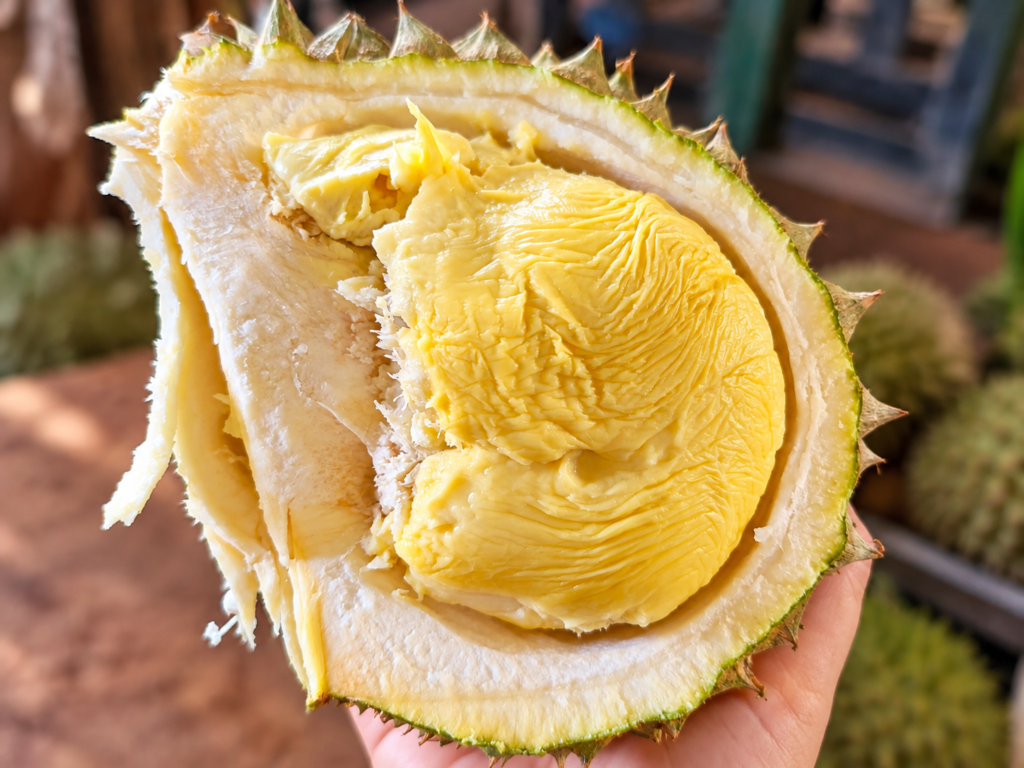
For many people around the world, durian is one of the most fascinating tropical fruits they have ever encountered. Its large size, distinctive appearance, creamy texture, and powerful aroma make it unlike almost any other fruit. Some people become devoted fans after their first taste, while others need a little more time to appreciate its unique character.
In recent years, Vietnamese durian has attracted growing attention beyond Southeast Asia. From traditional orchards in the Central Highlands and Mekong Delta to supermarkets and international markets, Vietnamese durian is increasingly becoming part of the global tropical fruit story.
But what makes Vietnamese durian so appealing? Is it the rich and creamy texture, the naturally sweet flavor, the diversity of varieties, or the growing ability of Vietnamese producers to bring this fruit to consumers around the world?
The answer lies in a combination of Vietnam’s natural conditions, agricultural traditions, distinctive varieties, and the development of modern processing and export technologies.
Vietnam: A Natural Home for Durian
Vietnam has a diverse agricultural landscape, ranging from the fertile Mekong Delta in the south to the volcanic highlands of the Central Highlands. These regions offer different combinations of climate, soil, water, and elevation that can support the cultivation of tropical fruits.
Durian is particularly well suited to Vietnam’s warm climate. Many growing areas have abundant sunlight, seasonal rainfall, and fertile soils that allow farmers to cultivate healthy durian trees.
Among the country’s important durian-growing regions, the Central Highlands has become particularly well known. Provinces such as Dak Lak, Lam Dong, and Dak Nong have developed significant agricultural areas where durian is cultivated alongside coffee, pepper, cacao, and other crops.
This creates an interesting connection between Vietnamese durian and the broader agricultural identity of Vietnam.
Vietnam is not simply a country that produces tropical fruit. It is a country where agriculture is closely connected to the landscape, local communities, and regional traditions.
What Makes Vietnamese Durian Different?
One of the most attractive characteristics of Vietnamese durian is its rich and creamy texture.
When ripe, the flesh can be soft, smooth, and almost custard-like. Depending on the variety and growing conditions, the flavor may combine sweetness with notes reminiscent of vanilla, caramel, cream, nuts, or tropical fruit.
For experienced durian lovers, this complexity is part of the appeal.
Unlike fruits that offer a single dominant flavor, durian can create a much more layered tasting experience. Its texture is also an important part of the experience. A good ripe durian can be remarkably creamy while still maintaining enough structure to make each piece satisfying.
This combination of flavor and texture is one reason why durian has developed such a strong following throughout Asia.
However, the international market presents a different challenge.
The same characteristic that makes fresh durian exciting for many consumers—the strong aroma—can also make it difficult for first-time consumers, particularly in markets where durian is not traditionally consumed.
And this is where innovation becomes important.
The Famous Durian Aroma
There is no way to talk about durian without talking about its smell.
Durian has a powerful aroma that can be immediately recognizable. For experienced consumers, this smell can be part of the attraction. For people encountering durian for the first time, however, it may be surprising or even overwhelming.
This creates an interesting paradox.
The distinctive aroma is part of what makes durian authentic. At the same time, it can become a barrier to wider consumption.
For fresh durian, the aroma can be particularly noticeable when the fruit is fully ripe. This is one reason why transporting, storing, and selling fresh durian requires careful handling.
For international consumers, especially those who are curious about tropical fruits but are not accustomed to strong-smelling foods, a more approachable form of durian can offer an easier introduction.
This is one of the reasons processed durian products are becoming increasingly interesting.
From Fresh Fruit to Global Product
Traditionally, enjoying durian meant eating it fresh.
Today, modern food processing allows the distinctive qualities of Vietnamese durian to be presented in new ways.
Fresh durian remains an important part of the experience. It allows consumers to enjoy the fruit in its most natural form, with its original texture, aroma, and flavor.
But fresh fruit also has limitations.
It is perishable. It requires careful temperature control and transportation. Its strong aroma can create logistical challenges. And its shelf life is relatively short compared with dried products.
Processing can help overcome some of these limitations.
One particularly interesting method is freeze-drying, also known as lyophilization or in Vietnamese: sấy thăng hoa.
Vietnamese Durian Meets Freeze-Drying Technology
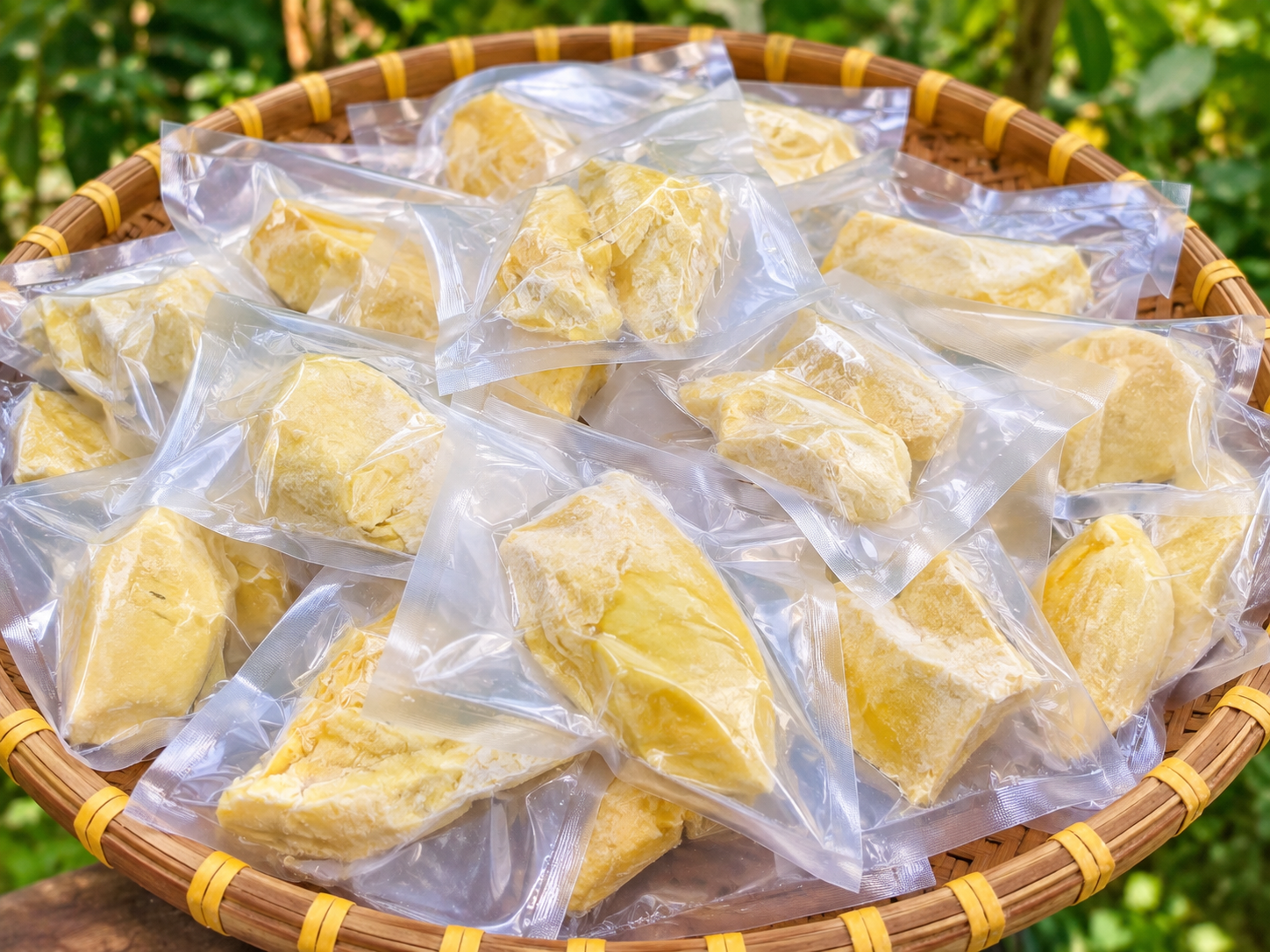
Freeze-dried durian offers an exciting bridge between traditional Vietnamese agriculture and modern international food consumption.
The basic principle of freeze-drying is to first freeze the product and then remove water under controlled low-pressure conditions. This allows much of the fruit’s structure, flavor, and nutritional characteristics to be retained compared with many conventional drying methods.
For Vietnamese durian, this creates a very different eating experience.
Instead of a soft, creamy fresh fruit, freeze-dried durian becomes light and crispy. When placed in the mouth, it can gradually soften and release the characteristic richness of durian.
Most importantly, the process provides a way to enjoy the distinctive taste of durian in a convenient format.
Preserving the Characteristic Taste
One of the major advantages of freeze-drying is its ability to retain much of the original flavor profile of the fruit.
Unlike conventional high-temperature drying, freeze-drying uses low temperatures during the main dehydration process. This can help protect delicate flavor compounds and preserve more of the fruit’s original characteristics.
As a result, high-quality freeze-dried Vietnamese durian can still deliver the recognizable sweet, creamy, and rich flavor associated with fresh durian.
The result is not intended to replace fresh durian.
Instead, it offers another way to experience it.
A More Approachable Aroma
There is another potential advantage for international consumers: aroma.
Fresh durian is famous for its powerful smell, and this can sometimes be a challenge when introducing the fruit to people who have never tried it before.
In a properly processed freeze-dried product, the sensory experience can be different from eating fresh durian. The aroma may be perceived as less intense, particularly when the product is sealed in appropriate packaging and consumed as a dry snack.
This does not mean that freeze-dried durian becomes completely odorless.
It is still durian, and its characteristic aroma remains part of the experience.
However, the format can make the fruit more approachable for consumers who enjoy trying new flavors but may find the aroma of fresh durian too strong.
For some Western consumers, this may be an important advantage.
They can discover the taste of Vietnamese durian without necessarily having the same first encounter with the intense aroma of freshly opened fruit.
In this way, freeze-dried durian can serve as a gentle introduction to one of Southeast Asia’s most distinctive fruits.
A Longer Shelf Life
Another major advantage of freeze-dried durian is convenience.
Fresh durian has a relatively limited shelf life and requires appropriate storage and transportation conditions. This can make international distribution more complicated.
Freeze-dried products contain very little moisture when properly processed and packaged. As a result, they can have a significantly longer shelf life than fresh fruit when stored correctly.
This opens up new possibilities for Vietnamese agricultural products.
Instead of requiring consumers to live close to a tropical fruit market or receive fresh fruit within a limited period, freeze-dried durian can be transported over much longer distances and stored for extended periods.
For international consumers, this means that Vietnamese tropical fruit can become a convenient pantry or snack product rather than something that must be consumed immediately.
From Vietnam’s Orchards to Western Snack Culture
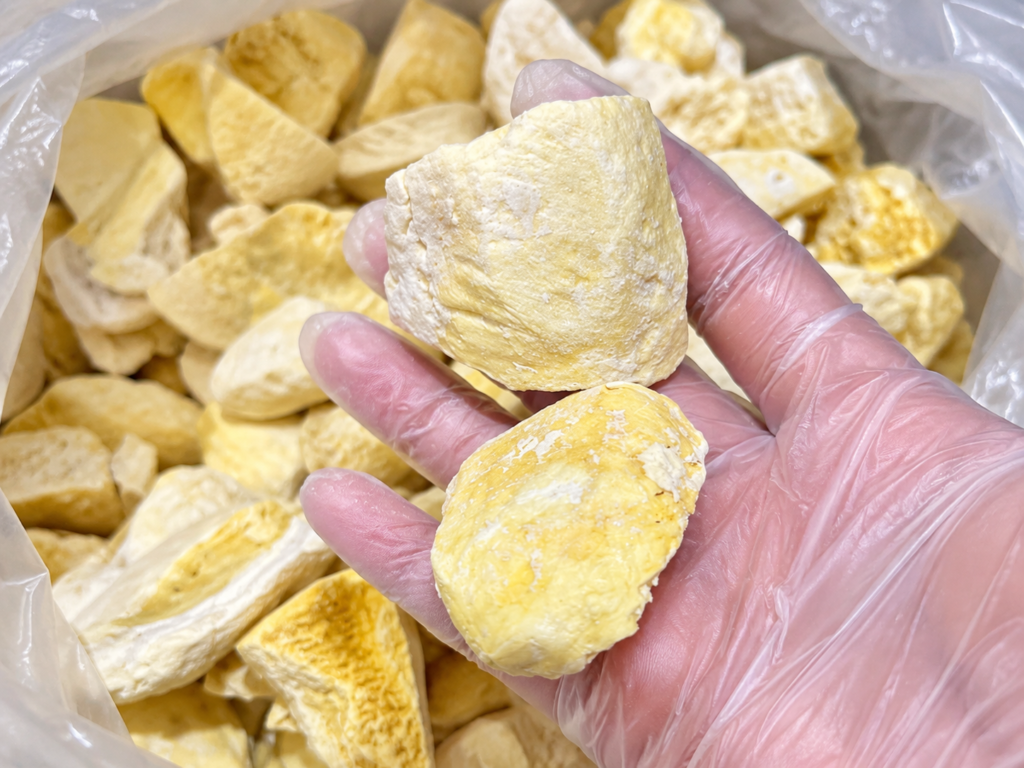
The global food market is changing.
Consumers increasingly want foods that are natural, convenient, interesting, and connected to a story.
This creates an opportunity for Vietnamese agricultural products.
A bag of freeze-dried Vietnamese durian is not simply a snack. It can represent a journey from a tropical orchard in Vietnam to a modern kitchen or office thousands of kilometers away.
The product combines several trends that are increasingly important in international food markets:
- Tropical and exotic flavors
- Convenient snacking
- Fruit-based ingredients
- Long shelf life
- Modern food processing
- Interest in authentic regional products
- Curiosity about Asian food culture
For consumers who have never visited Vietnam, trying freeze-dried durian can also become a small introduction to the country’s food culture.
After all, food is often one of the easiest ways to discover another country.
The Importance of Authentic Vietnamese Agriculture
As Vietnamese agricultural products enter international markets, authenticity becomes increasingly important.
Consumers today often want to know where their food comes from.
They want to understand the origin of the ingredients, the farmers who grow them, and the environment in which they are produced.
For Vietnamese durian, this story begins in the orchard.
A mature durian tree can take years of care before producing significant quantities of fruit. Farmers need to manage irrigation, nutrition, pests, flowering, pollination, and harvesting carefully.
The quality of the final product is therefore connected to every stage of the agricultural process.
This is particularly important for premium products.
A high-quality freeze-dried durian starts with high-quality fresh fruit. Processing technology cannot transform poor raw material into an exceptional product.
The journey therefore begins with the orchard.
Why the Central Highlands Matters
Vietnam’s Central Highlands is particularly interesting when discussing the country’s agricultural identity.
The region is famous for its red basaltic soils and agricultural landscapes. Coffee has long been one of its most recognizable products, but the region is also home to other important crops, including durian.
The combination of coffee plantations, fruit orchards, forests, waterfalls, and rural communities creates a distinctive landscape.
For a brand such as Green Authentic Vietnam, this agricultural diversity is an important part of the story.
Vietnamese agriculture is not defined by a single product.
Coffee, cacao, pepper, durian, cashews, tropical fruits, herbs, and other agricultural products all contribute to the country’s rich food culture.
Durian is one particularly memorable example because of its distinctive flavor and growing international recognition.
More Than an Exotic Fruit
The growing popularity of Vietnamese durian reflects something larger than a simple trend in tropical fruit.
It demonstrates how traditional agricultural products can find new audiences when they are combined with modern technology, thoughtful processing, and international marketing.
Fresh durian introduces consumers to the original fruit.
Processed products can make that experience more convenient.
Freeze-dried durian, in particular, offers an interesting balance between authenticity and modern consumption.
The taste remains recognizably durian, while the texture becomes completely different. The aroma can be more approachable for consumers who are not accustomed to fresh durian, and the significantly reduced moisture allows the product to be stored and transported more conveniently.
This combination could help introduce Vietnamese tropical fruit to consumers who might otherwise never have the opportunity to try it.
The Future of Vietnamese Durian
Vietnam’s durian industry has an opportunity to move beyond simply selling fresh fruit.
The future can include a wider range of value-added products: freeze-dried durian, durian puree, frozen durian, durian-based desserts, snacks, ingredients, and other innovative food products.
Value-added processing can help agricultural products travel further and reach different types of consumers.
For international markets, this is particularly important.
Not everyone has access to fresh Vietnamese durian. Not everyone wants to deal with its strong aroma. Not everyone has the opportunity to visit a Vietnamese orchard.
But almost anyone can try a packaged fruit snack.
That simple change in format can dramatically expand the potential audience.
Discovering Vietnam One Bite at a Time
Perhaps the most interesting thing about Vietnamese durian is that it challenges our idea of what fruit can be.
It is sweet but complex.
Creamy but distinctive.
Familiar as a fruit, yet completely different from almost anything else.
For those who already love durian, Vietnamese varieties offer another opportunity to explore the diversity of this remarkable fruit.
For those who have never tried it, a carefully processed product such as freeze-dried durian may provide a more accessible first experience.
And for international consumers interested in authentic Vietnamese food, it offers a direct connection to the country’s tropical agricultural heritage.
At Green Authentic Vietnam, we believe that authentic agricultural products should carry more than just a flavor. They should carry a sense of place.
Behind every piece of Vietnamese durian is an orchard, a farmer, a region, a climate, and a long tradition of working with the land.
That is what makes Vietnamese agricultural products worth discovering.
From Fresh Durian to a Modern Global Snack
The story of Vietnamese durian is evolving.
Once known primarily as a Southeast Asian delicacy, durian is now gaining attention among consumers around the world. Vietnam’s diverse agricultural regions, growing production capabilities, and increasingly sophisticated food-processing industry are helping create new opportunities for this distinctive fruit.
Fresh durian will always have its own unique charm.
But freeze-dried durian offers another possibility: the chance to preserve much of the fruit’s original flavor while transforming it into a light, convenient, longer-lasting snack.
For consumers who find fresh durian’s aroma challenging, this format can provide a gentler introduction. The characteristic taste remains, while the sensory experience can be less intense and easier to enjoy in everyday settings.
It is a simple example of how Vietnamese agriculture can meet modern international preferences without losing its identity.
From the green orchards of Vietnam to tables around the world, Vietnamese durian is becoming more than an exotic fruit.
It is becoming a story of Vietnamese nature, agriculture, innovation, and authentic flavor—one bite at a time.